


INTRODUCTION
Idiopathic scoliosis (IS) is a disease without a specific cause that leads to a deviation in the coronal plane of the spine. This deformity occurs in all three dimensions of the spine, causing changes in the appearance of the back of affected patients.1 Because this disease has a higher incidence in young girls during puberty,2 these deformities can cause problems in the lives of these patients, especially in terms of their mental health and social relationships, making this one of the main challenges in the treatment of these patients.3 Despite these problems, the visible deformity caused by the scoliosis is still not taken much into consideration when making decisions about patient treatment.
Over time, several tools have been developed to try to evaluate and quantify several aspects of the quality of life of these patients, and several methods for measuring the perception of the deformity indirectly have also been created. The Walter Reed Visual Evaluation Scale (WRVAS), however, was the first tool to use drawings to specifically evaluate the patient’s own perception of their spinal deformity.4
Searching for a tool to measure the perception of these deformities with greater precision, Sanders et al.5 developed a questionnaire in 2007 aimed at assessing the perceptions of the patients and their relatives regarding several aspects of the appearance of the spinal deformities caused by IS. This questionnaire consists of an illustrated section, inspired by the WRVAS, in which the patient and their family members select the image that best represents the way in which they see the appearance of the deformity at that time and another section with statements to which they try to react, expressing their expectations in terms of the deformity.6
Although the questionnaire proposed by Sanders et al.5 is a useful tool and has already been validated for monitoring patients with IS, there is neither a validated translation nor a culturally adapted version of this questionnaire for Brazil, creating gaps in a more complete, global evaluation of these patients. This work provides a translation and seeks validation for the use of the Spine Appearance Questionnaire (SAQ) in Brazilian Portuguese, aimed at promoting more widespread use of this tool in Brazil.
MATERIALS AND METHODS
The translation and cultural adaptation were conducted following the recommendations of the American Association of Surgery. 7 The original English versions were translated to Portuguese independently by two orthopedic physicians studying to be spine surgeons, then evaluated together by a committee of five spine surgeons to generate a translated version of each questionnaire. A back translation of each was then done by a native English speaker and this version was compared to the English original. They then made comparisons and published final Portuguese versions of the questionnaires (Figures 1 and 2) for the execution of a pre-test with the target audience.
The data collection took place in the spine surgery clinic of the Hospital Getúlio Vargas (HGV), Recife-PE. The questionnaire was given to patients with IS and their accompanying family members, to be filled out during the outpatient consultations, following an explanation of the purpose of the questionnaire and their acceptance and signing of an informed consent form.
The inclusion criteria adopted were (1) patients 10 years of age or older, (2) with idiopathic scoliosis already submitted to surgery or not. All patients not afflicted by IS or under 10 years of age were excluded from the study, as were those who did not complete the questionnaire or did not agree to participate in the study.
The statistical analysis was performed by an independent statistician using the free R software, version 3.1.2 for the Linux operating system. The Cronbach’s alpha values were calculated to analyze the reliability of the questionnaire.
RESULTS
A total of 22 patients were approached to fill out the questionnaire.
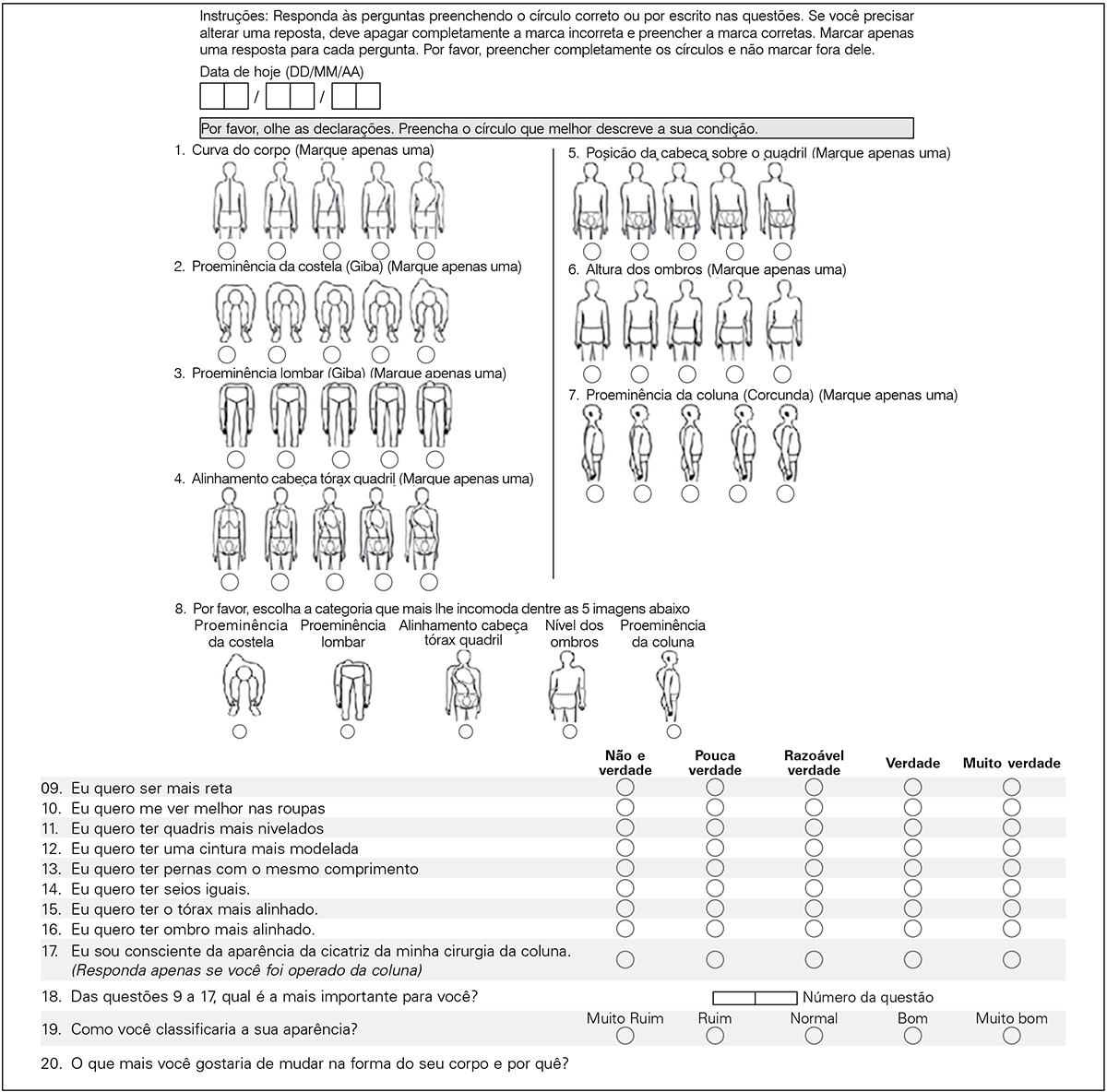
Figure 1. Spine Appearancce Questionnaire in brazilian portuguese.

Figure 2. Spine Appearance Questionnaire in brazilian portuguese.
Of these, one patient refused to complete it saying that her appearance made her so uncomfortable that she did not want to do it, and another patient did not conclude the questionnaire. These two patients were excluded from the study, leaving a total of 20 patients.
Eighteen of the patients were female (90%) and two were male (10%). The average age of the sample population was 14.8 (±2.5) years. Four (20%) of these patients had undergone surgery for IS. The average completion times were 6 minutes and 28 seconds and 7 minutes and 44 seconds for the patients and their relatives, respectively.
Reliability was measured using the responses of the patients and their relatives to calculate Cronbach’s alpha and yielded values of 0.79 and 0.75, respectively.
DISCUSSION
Tools to evaluate patients with IS are very important, given that their lives are affected in different ways and to varying degrees. An understanding of their doubts and concerns about treatment is important for us to better educate patients and make them feel more secure and confident.8
In the past, appearance was measured subjectively with questionnaires, measurements, and the perceptions of the physician himself, until Walter Reed (WR) launched a new questionnaire to evaluate the perception of the patients directly, with drawings that simulate the patient’s appearance in a gradual and staged manner.4 Later, Sanders et al.,5 using the drawings of WR as a reference, designed the SAQ, which sought to assess the perception of the patient and their wishes for their appearance. After several studies, the SAQ has proved to be a statistically valid tool for measuring the perception of the appearance of these paitents.5,6
The main objective of this work was to validate the Brazilian Portuguese version of this important tool for the assessment of patients with IS. With this, the final step of the American Association of Surgery protocol7 for the translation and cultural adaptation of questionnaires was complete i.e. to show the questionnaire to the target audience, to determine whether there were any difficulties in understanding or executing it, and correct them.
The Cronbach’s alpha values of 0.79 for patients and 0.75 for their relatives resulting from our analysis show that the questionnaire is a reliable tool. These values corroborate those found in the literature.5,6,9 Analyses of the validation and the internal consistency of the separate domains of the questionnaire were not conducted, nor did we differentiate between patients pre- or postoperatively, or make other clinical and radiological correlations, because the patient sample was small and they were not part of this phase of the questionnaire pre-test.
The time it took patients and their relatives to fill out the questionnaire: 6 minutes and 28 seconds and 7 minutes and 44 seconds, respectively, was perfectly acceptable, and the questionnaire was easily completed while the patients waited for their doctor’s appointments, in the waiting room.
When questioned about difficulties or suggestions for improvement, most of the patients replied that they completed the questionnaire with no difficulty. The most pertinent observations related to the format, rather than the content of the questionnaire.
CONCLUSION
The Brazilian Portuguese version of the Spine Appearance Questionnaire presented in this work was shown as a valid tool to achieve its purpose in the pre-test phase. Additional studies are necessary with larger patient samples for a better clinical and statistical validation of the questionnaire.
All the authors declare that there are no conflicts of interest regarding this article.
